California real estate is often associated with high home prices, expensive coastal markets and small residential lots. But head into the state’s more remote northern counties and a very different type of property occasionally appears.
One example is this unusual 95-acre property in Douglas City, California, currently offered for $142,500.
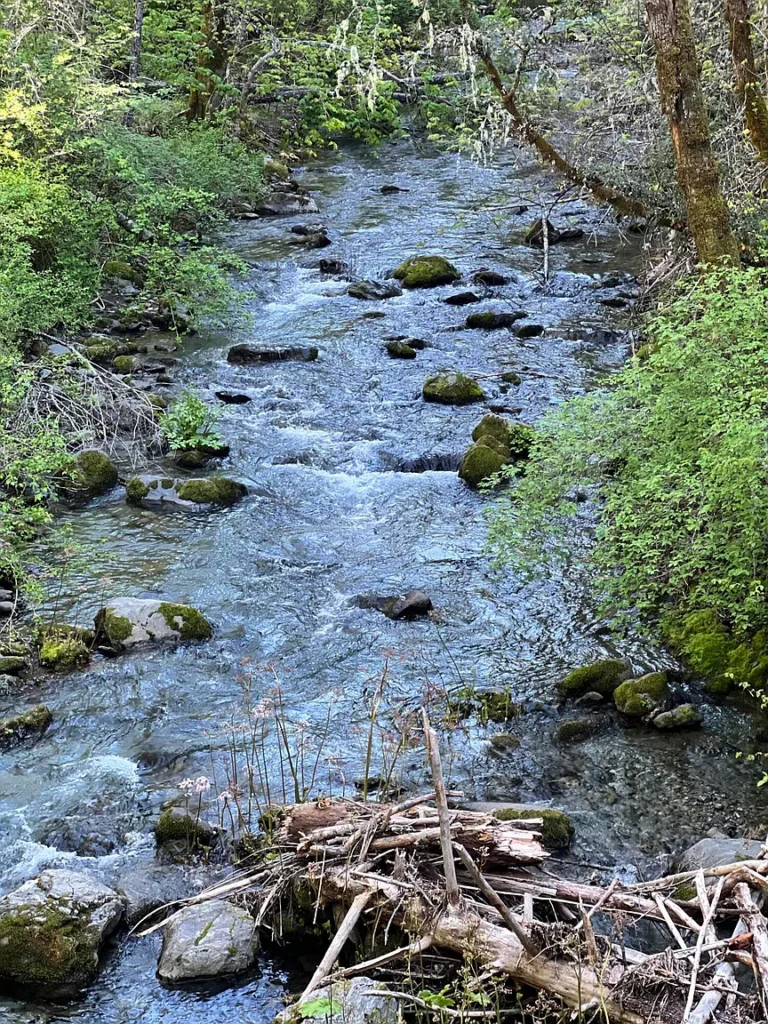
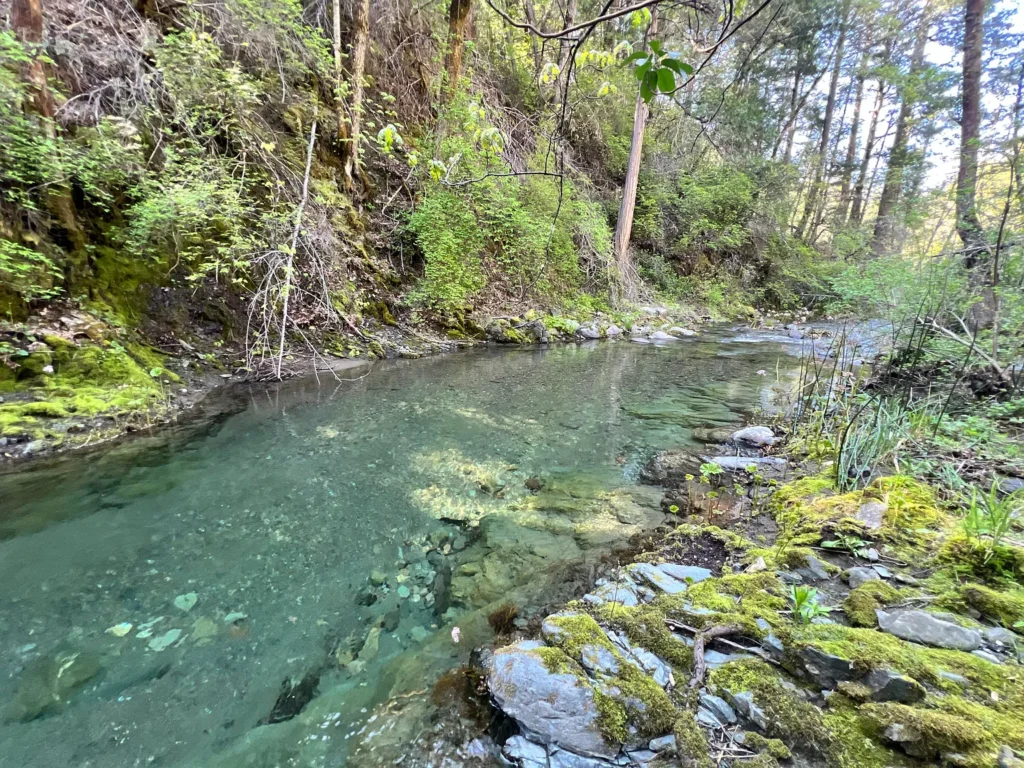
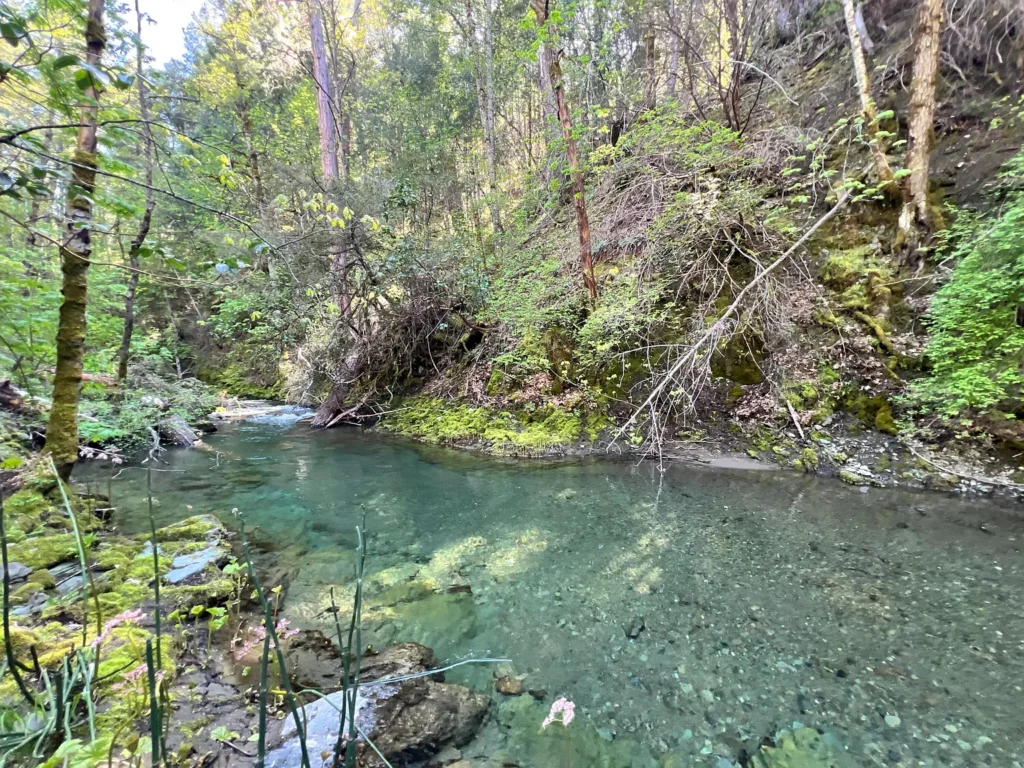
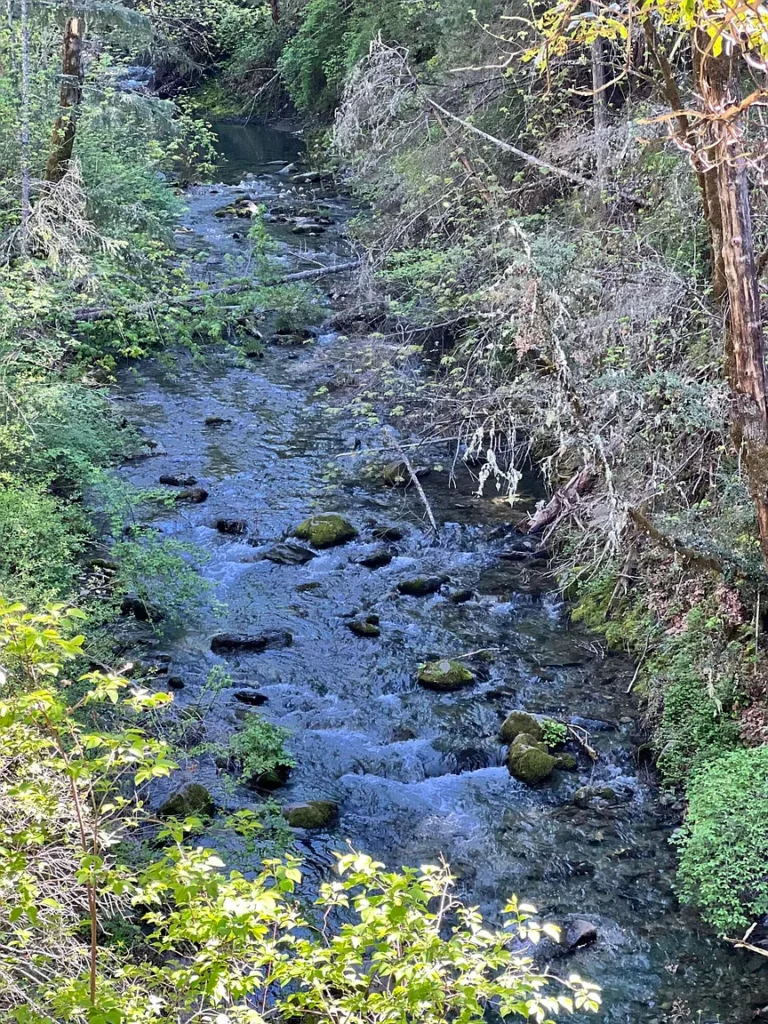
Located at 1500 & 1551 Reading Creek Rd, Douglas City, CA 96024, the property isn’t a conventional house on acreage. Instead, it is an off-grid rural setup spread across two parcels, with two insulated cabins, multiple outbuildings, garden areas, large water-storage tanks and approximately 172 feet of a year-round creek running through the property, according to the listing information.
For someone researching off-grid property for sale in California, the combination is certainly interesting. But the property also comes with major practical considerations: there is currently no conventional bathroom, septic system, well or electricity, and much of the larger parcel is described as steep.
Here’s a closer look at what $142,500 actually buys.
Property Overview
| Property Detail | Information |
|---|---|
| Asking Price | $142,500 |
| Location | Douglas City, California 96024 |
| Property Type | Unimproved Land |
| Total Land | Approximately 95 acres |
| Number of Parcels | 2 |
| Cabins | 2 insulated cabins |
| Bedrooms Listed | 2 |
| Bathrooms | 0 |
| Creek | Year-round creek |
| Creek Through Parcel | Approximately 172 ft. |
| Water | Creek; three 5,000-gallon tanks listed |
| Septic | Not installed |
| Electricity | Not currently present |
| Well | Not currently present |
| Terrain | Flat, rolling, sloped and steep areas |
| Setting | Rural and wooded |
| Views | Hills and mountains |
| Road Surface | Dirt and paved |
| Access/Security | Behind an electronic gate |
| Additional Features | Community kitchen, workshops, outbuildings, garden areas |
| Current Asking Price | $142,500 |
The property is particularly unusual because the improvements are already oriented toward an off-grid lifestyle rather than traditional residential living.
What Does $142,500 Buy Across 95 Acres?
Looking only at the asking price and advertised acreage gives us a useful starting calculation.
$142,500 ÷ 95 acres = approximately $1,500 per acre.
That does not mean every acre is worth $1,500 or that the property is necessarily undervalued.
The calculation doesn’t account for the cabins, creek frontage, water-storage infrastructure, terrain, road access or differences in usability across the property.
In fact, one of the biggest details buyers need to understand is that the 95 acres are divided between two parcels.
According to the listing description, one parcel contains a little more than eight acres and includes the structures and water tanks. The second parcel contains more than 86 acres and is described as steep, primarily creating privacy, although the listing indicates it could potentially be accessed.
That’s important.
Someone seeing “95 acres” shouldn’t automatically assume they’re buying 95 acres of flat, easily developed land.
Two Parcels Create a Very Different Property
This may be one of the most important aspects of the listing.
Rather than thinking of the property as one giant 95-acre homestead, buyers should evaluate each parcel separately.
The smaller parcel appears to contain much of the practical infrastructure: cabins, garden areas, outbuildings and water storage.
The larger parcel may provide a very different kind of value.
Its steep and heavily wooded terrain could contribute privacy, recreation and separation from neighboring properties, but those characteristics can also make construction, road building and utility installation significantly more complicated.
Before purchasing, a buyer would want to verify parcel boundaries, legal access to both parcels and whether each parcel could legally be developed or used independently.
A Year-Round Creek May Be the Standout Feature
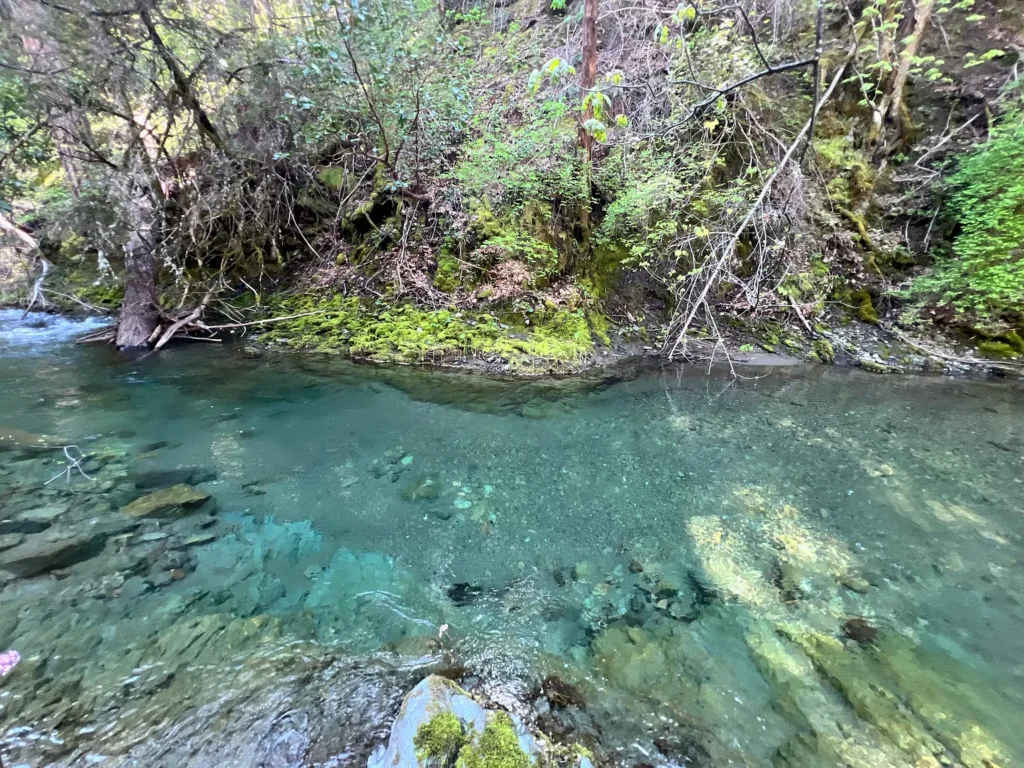
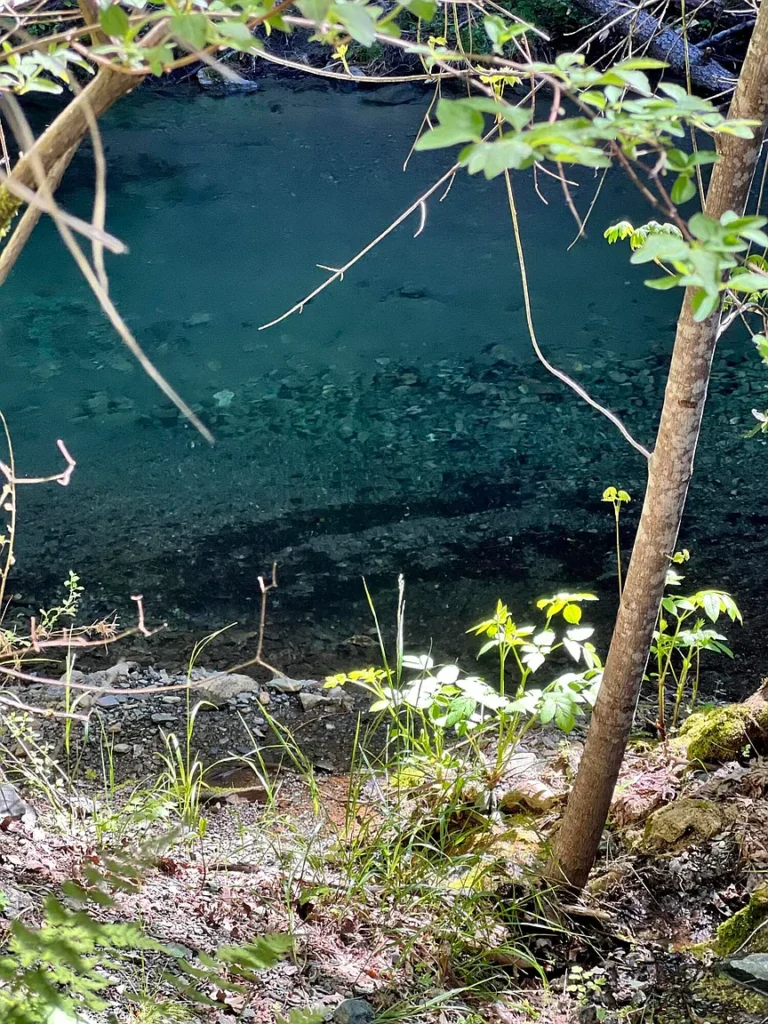
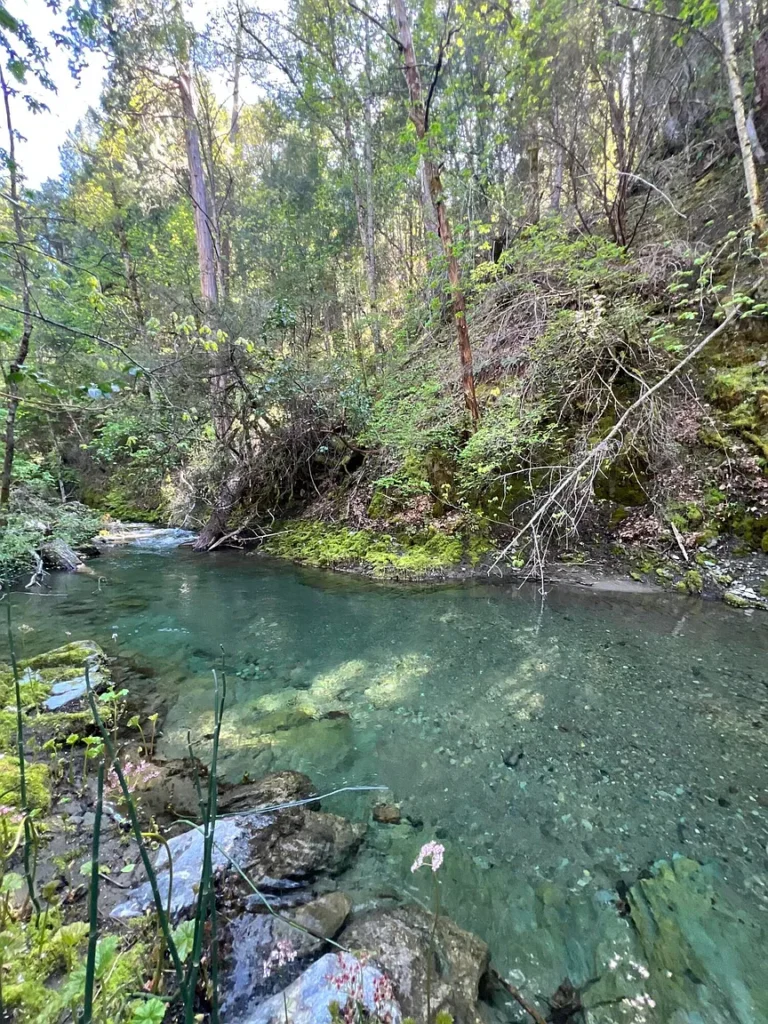
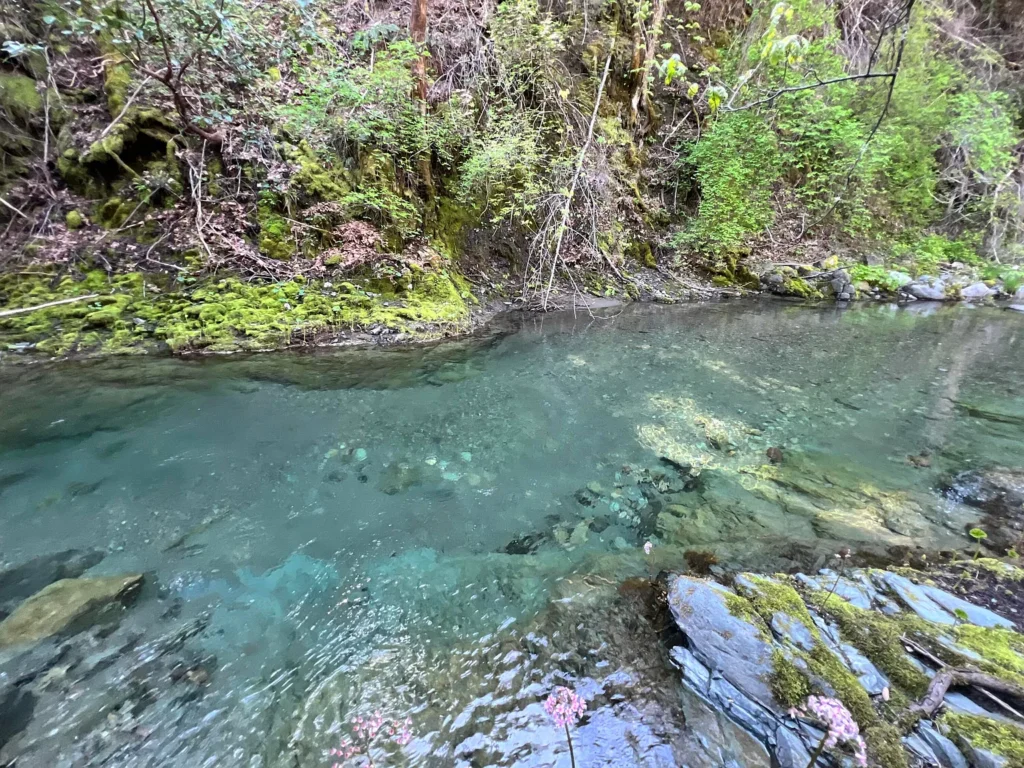
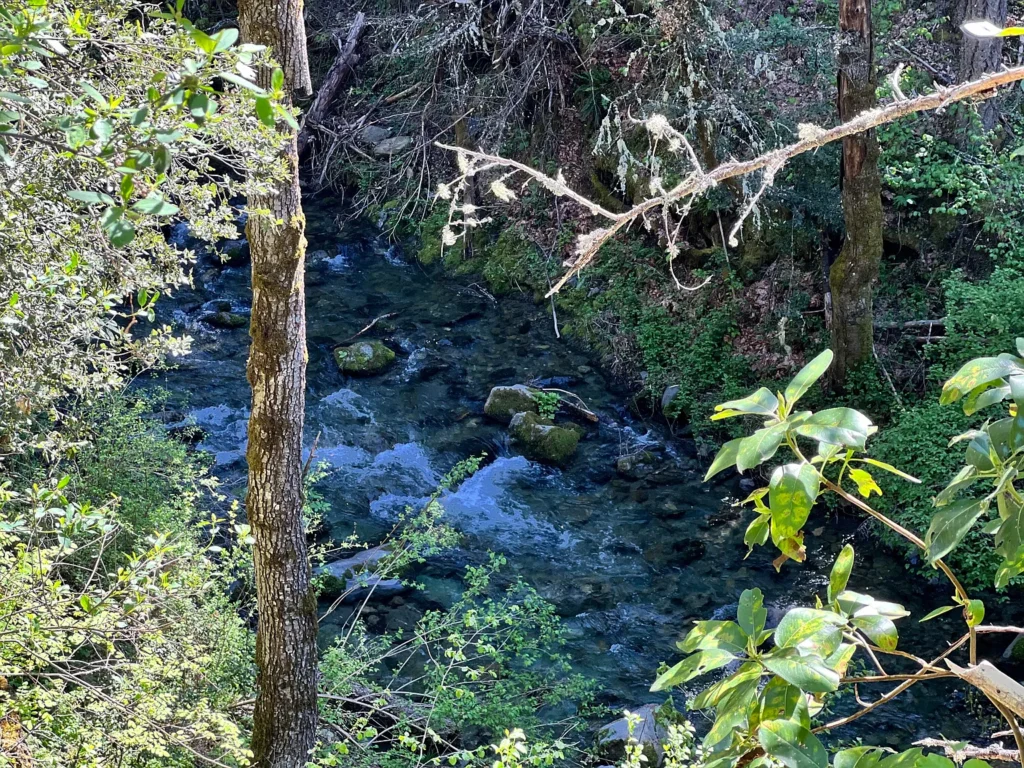
Of all the property’s characteristics, the creek is arguably the most visually striking.
The supplied photographs show clear water moving through a heavily wooded setting, including deeper pools and rocky sections surrounded by vegetation.
The listing describes approximately 172 feet of year-round creek running through the parcel.
For buyers searching for California land with a creek, that could make the property substantially more appealing than similarly priced dry acreage.
But owning property next to flowing water also creates additional due-diligence questions.
A buyer should investigate flood exposure, erosion, riparian restrictions, environmental rules, water rights and whether water from the creek can legally be diverted or used for the buyer’s intended purposes.
The presence of a creek should never automatically be interpreted as permission to use unlimited creek water.
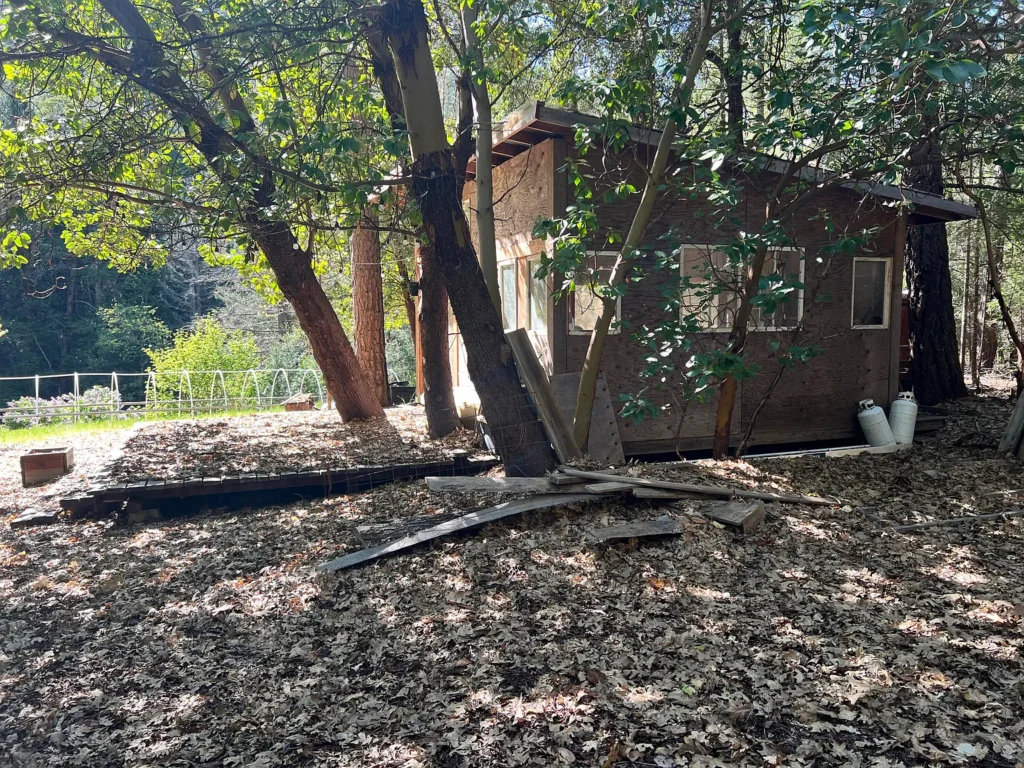
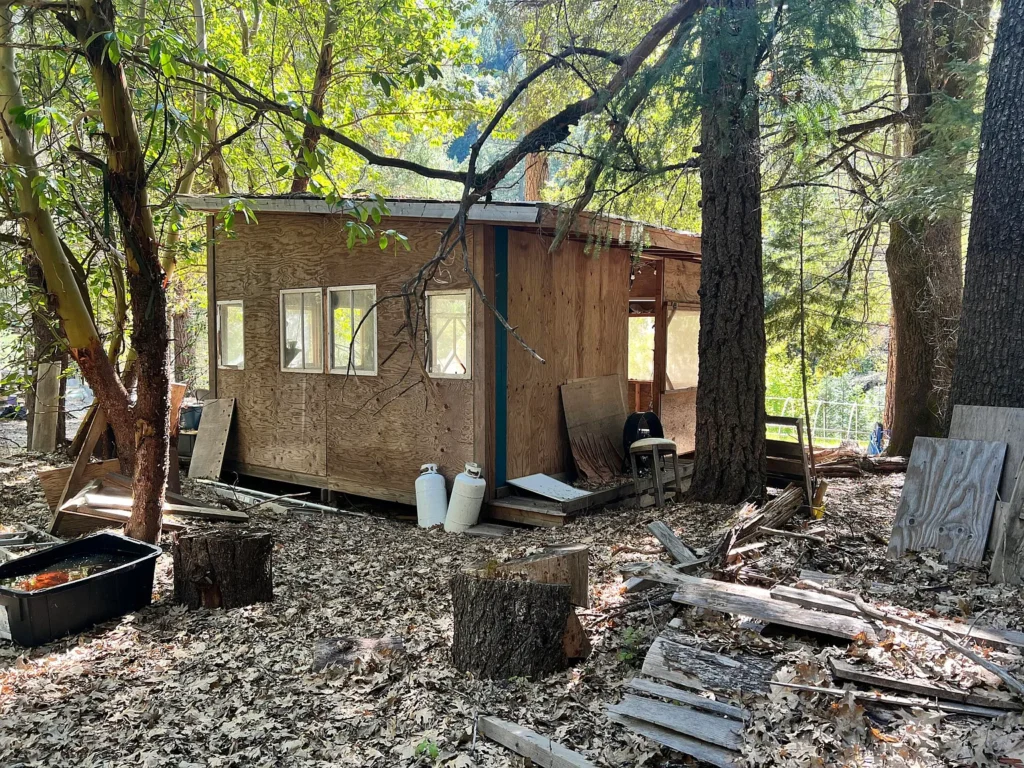
Two Insulated Cabins Already on the Property
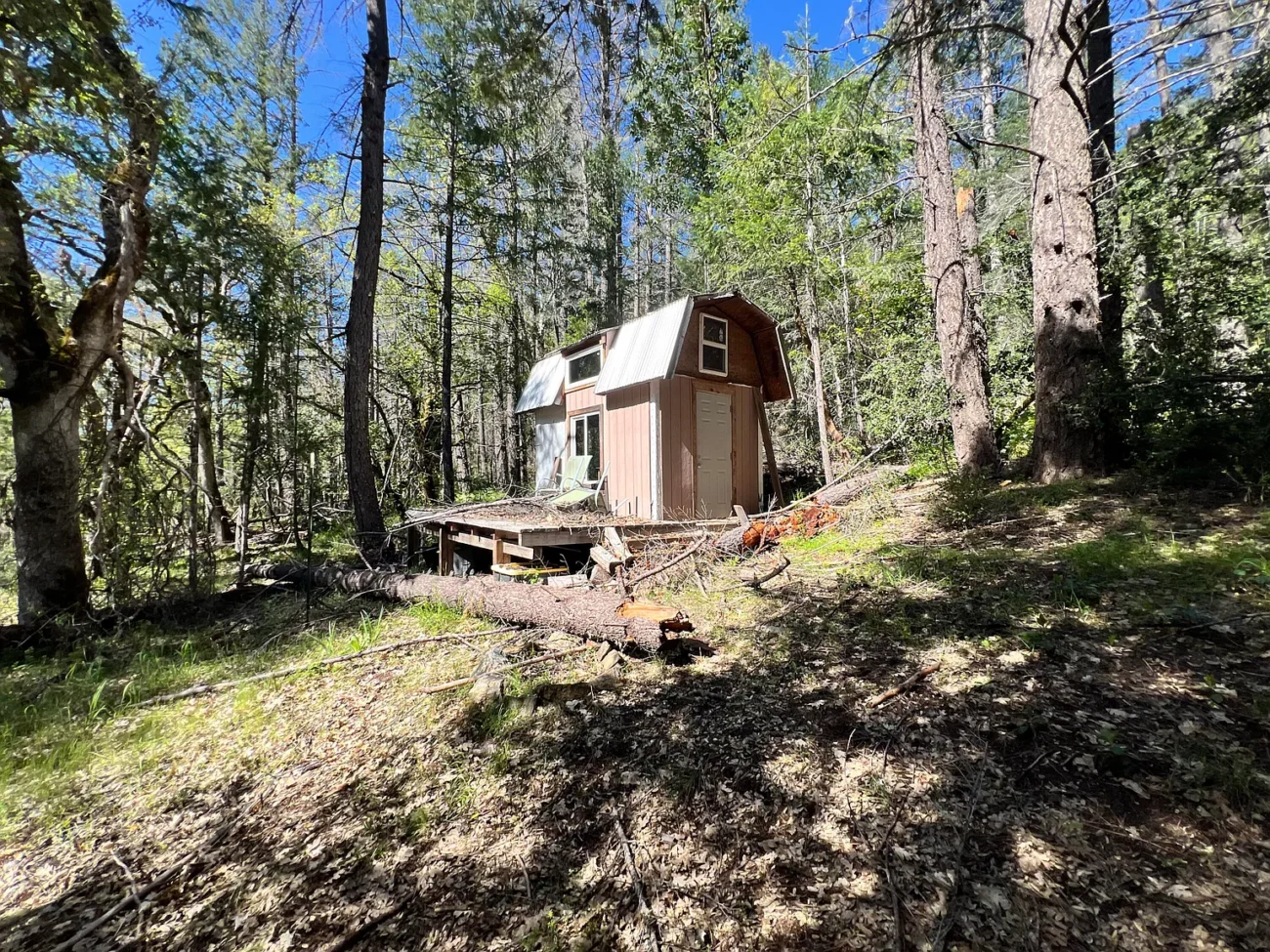
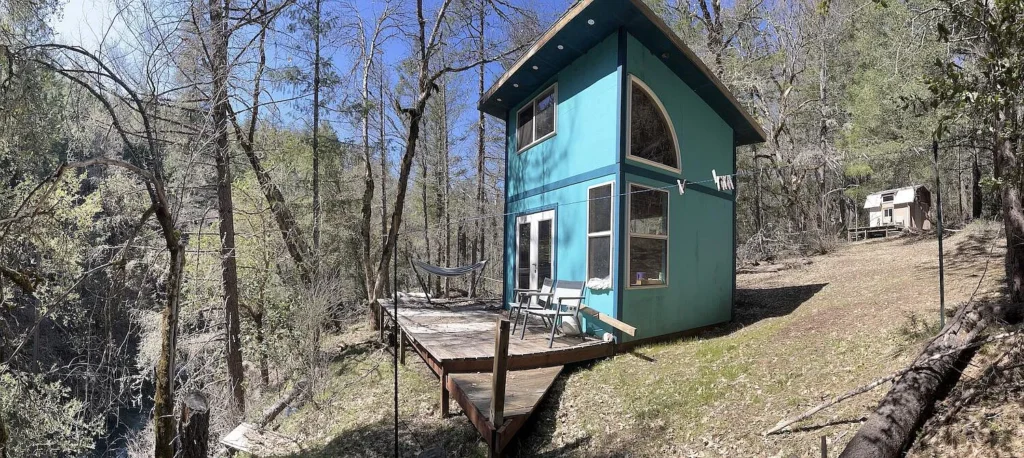
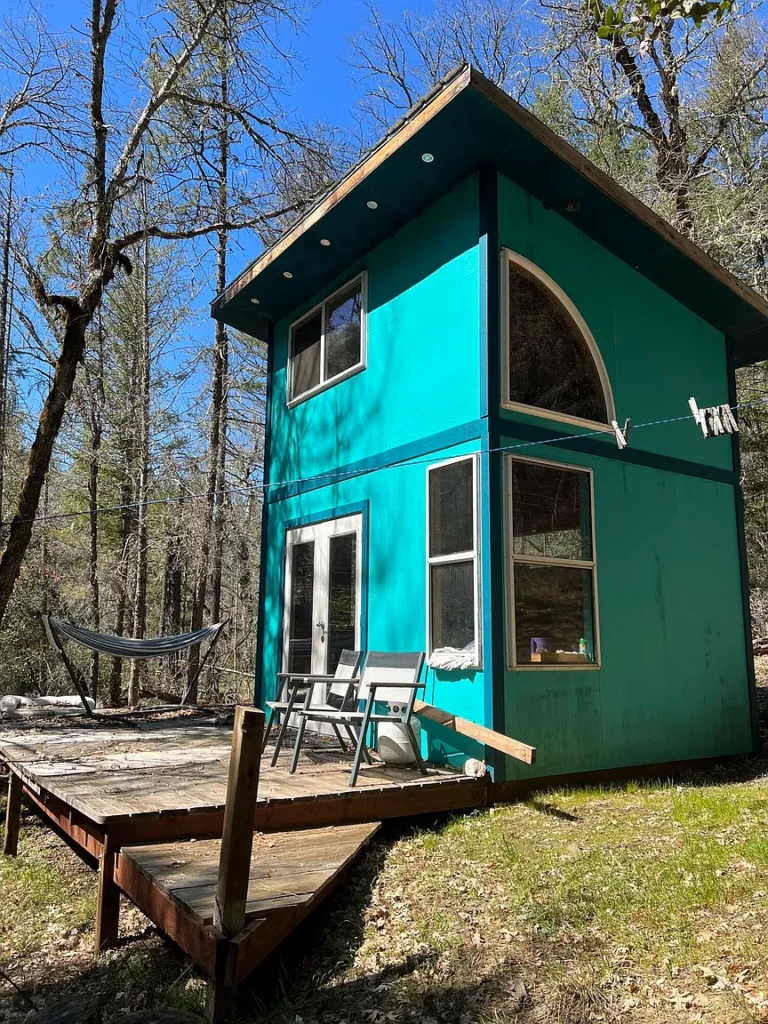
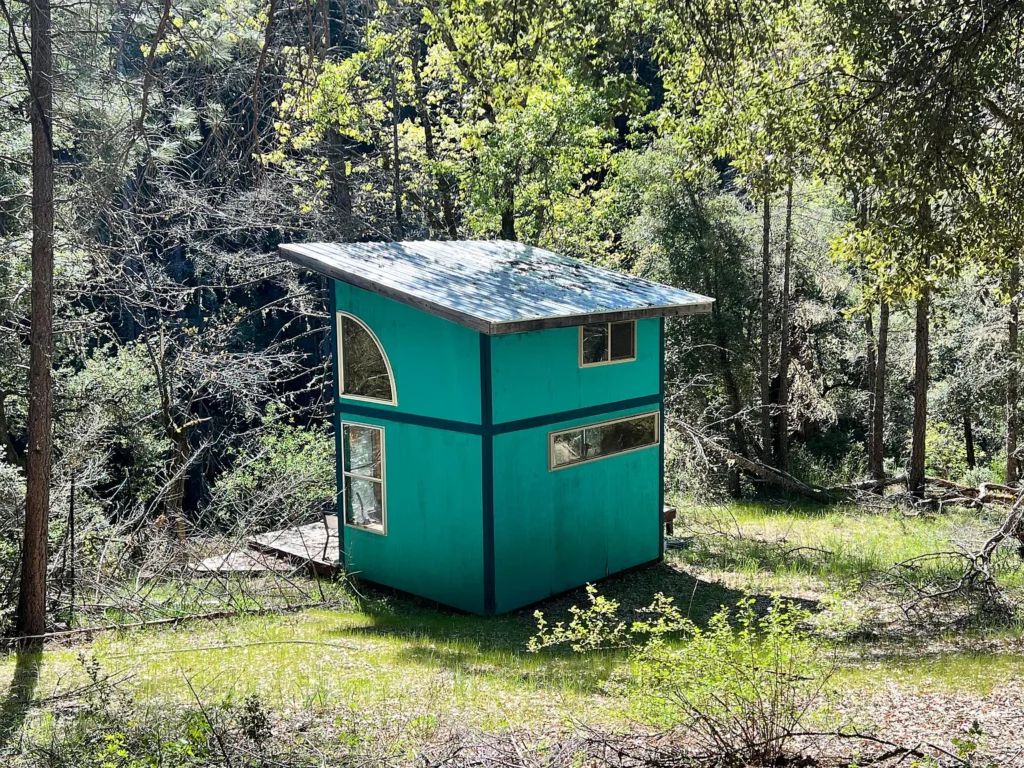
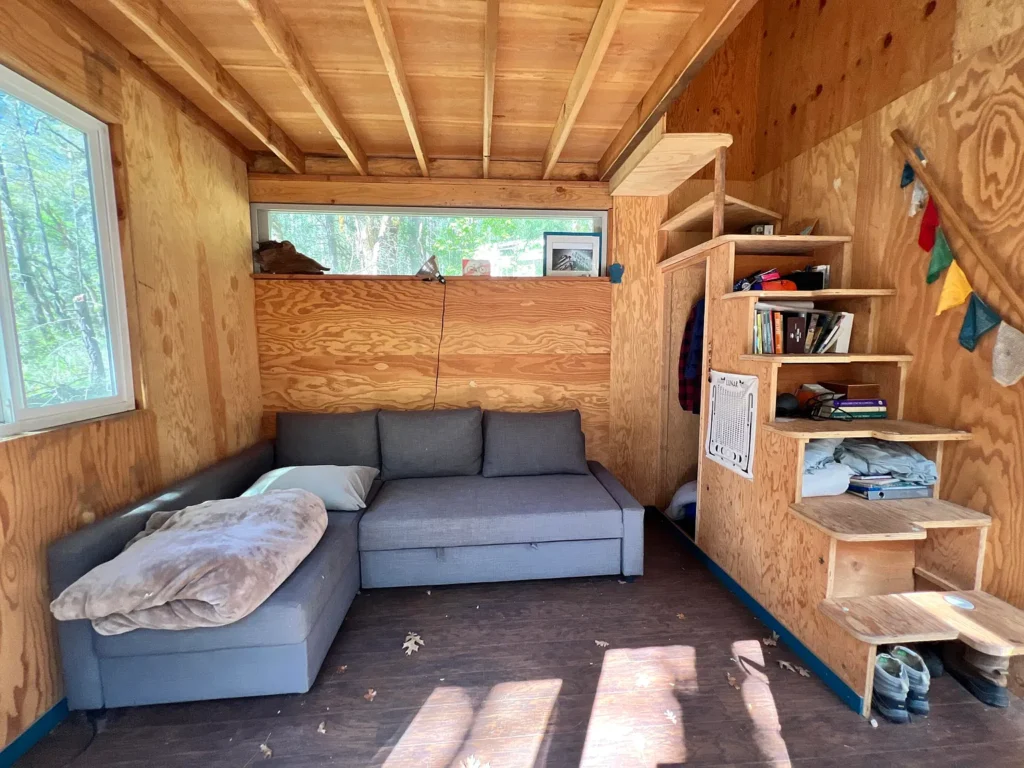
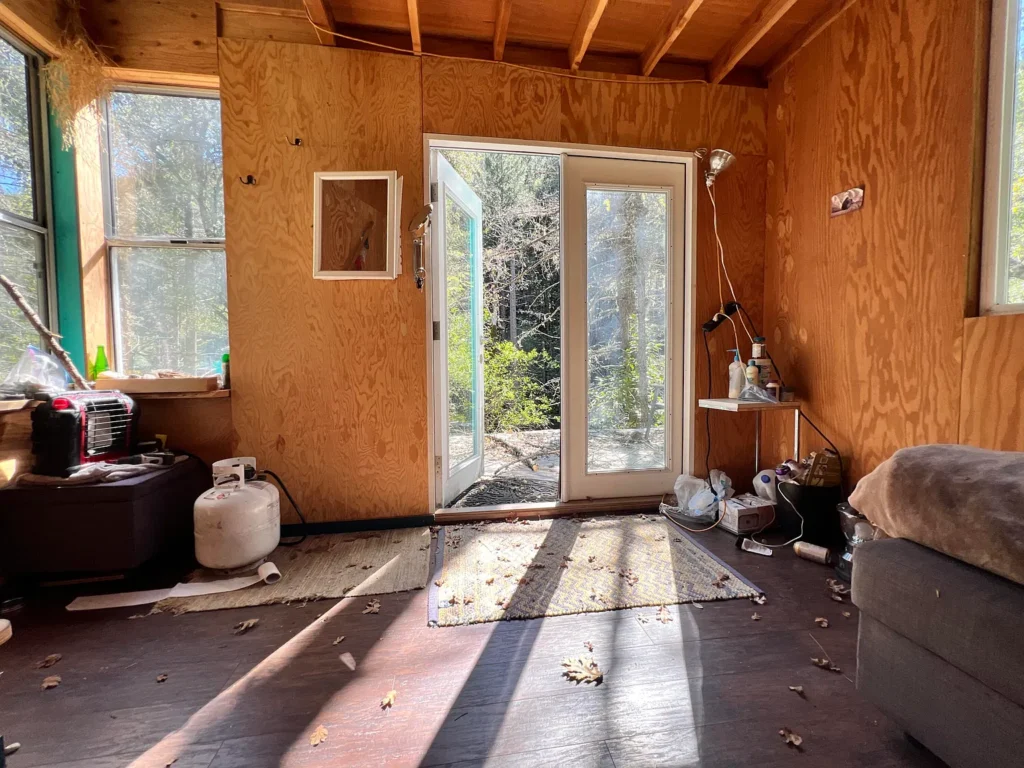
Instead of starting with completely vacant land, this property includes two cabins described by the listing as well-built and insulated.
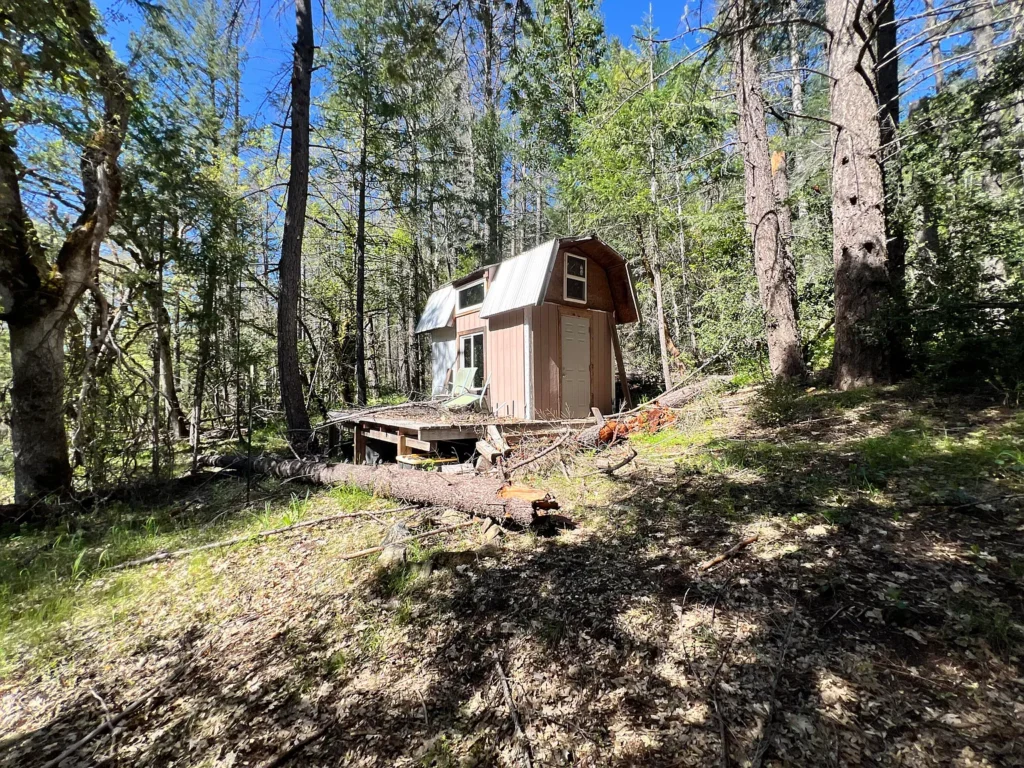
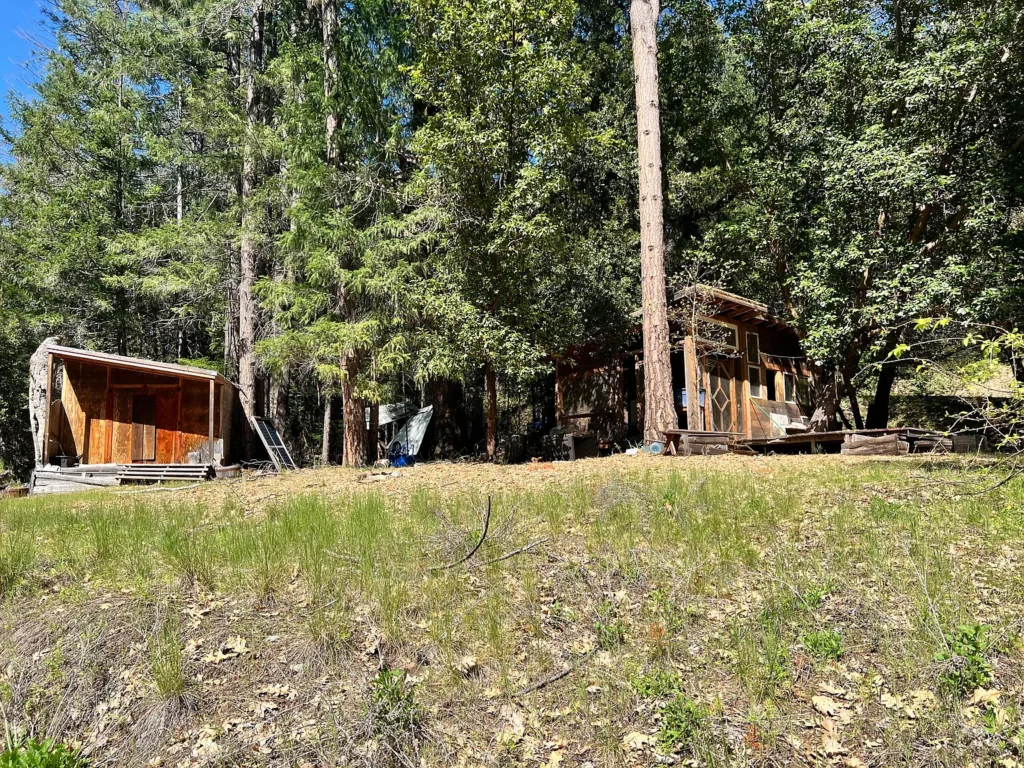
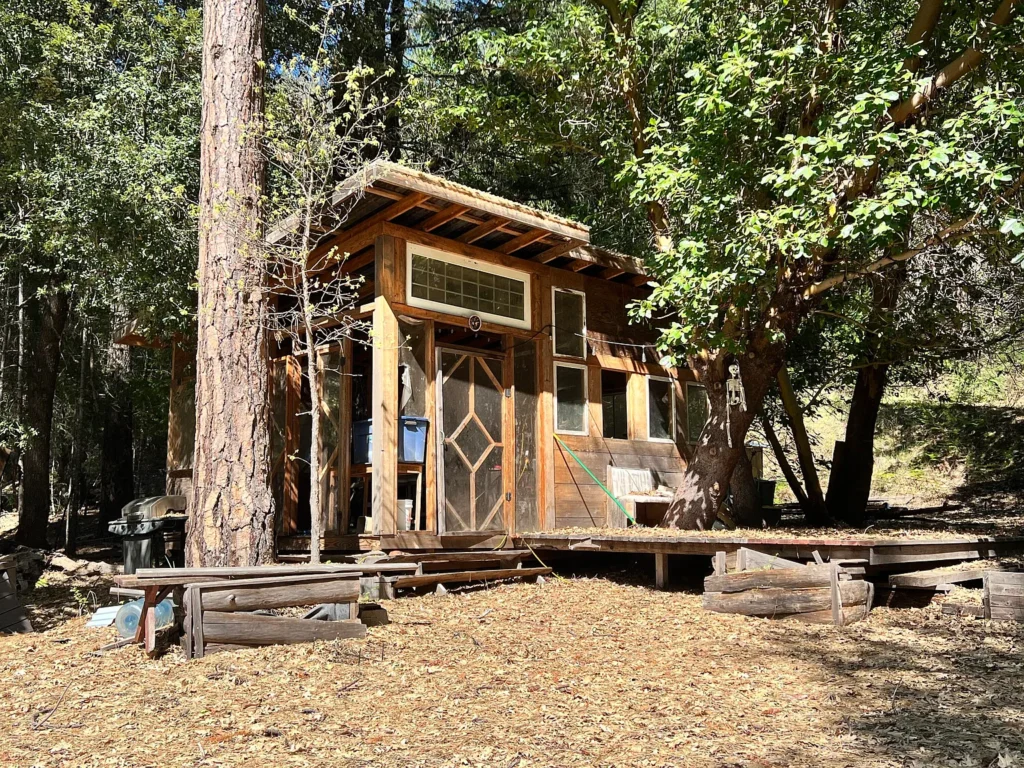
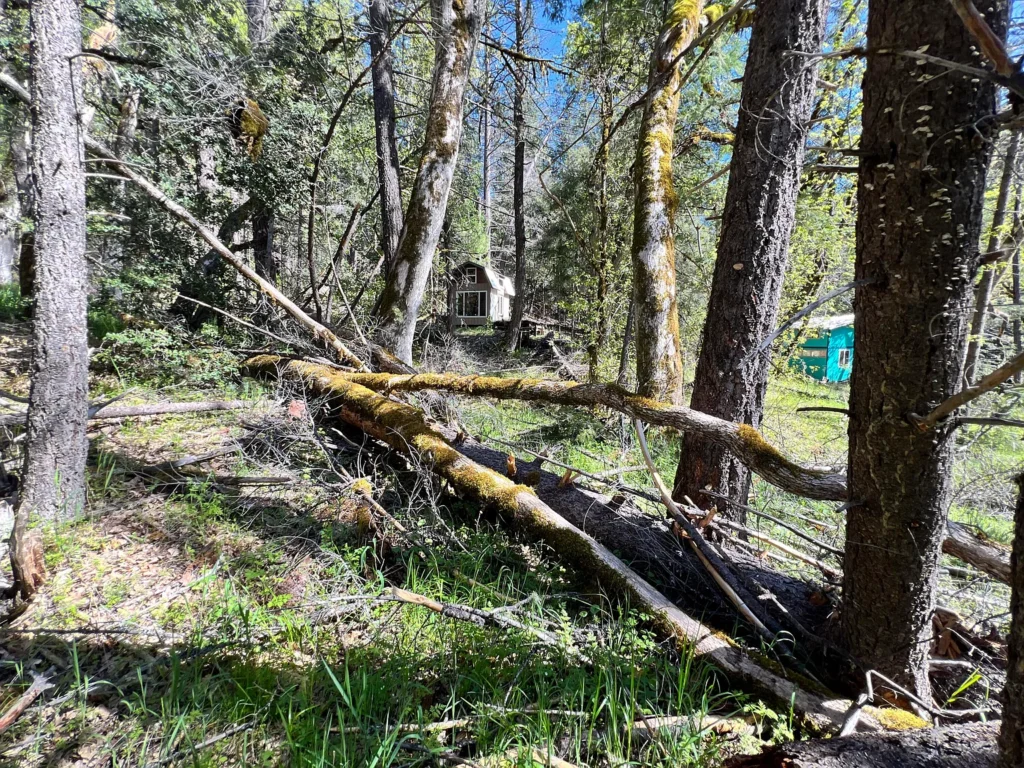
The photographs show compact wood-finished structures surrounded by forest.
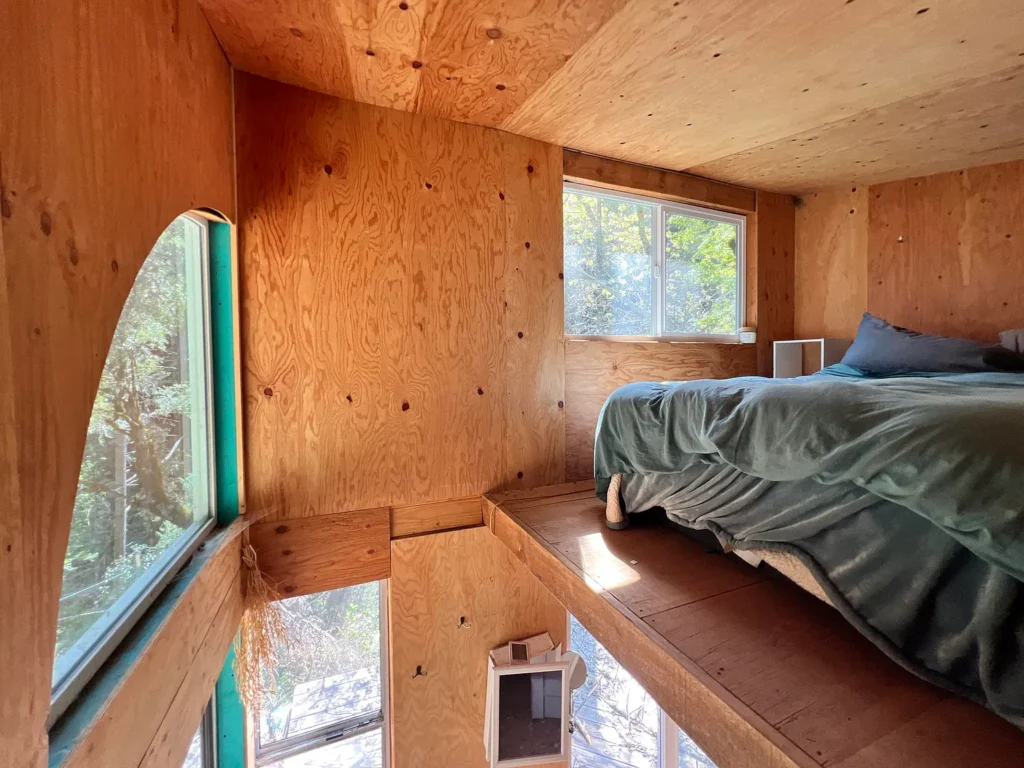
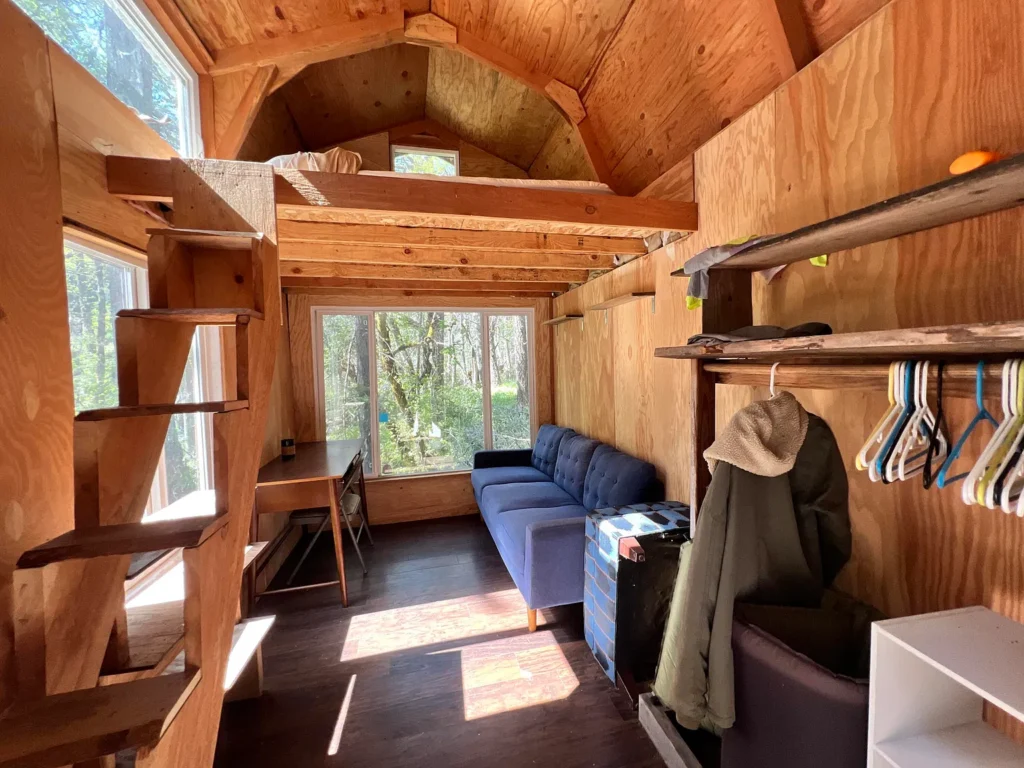
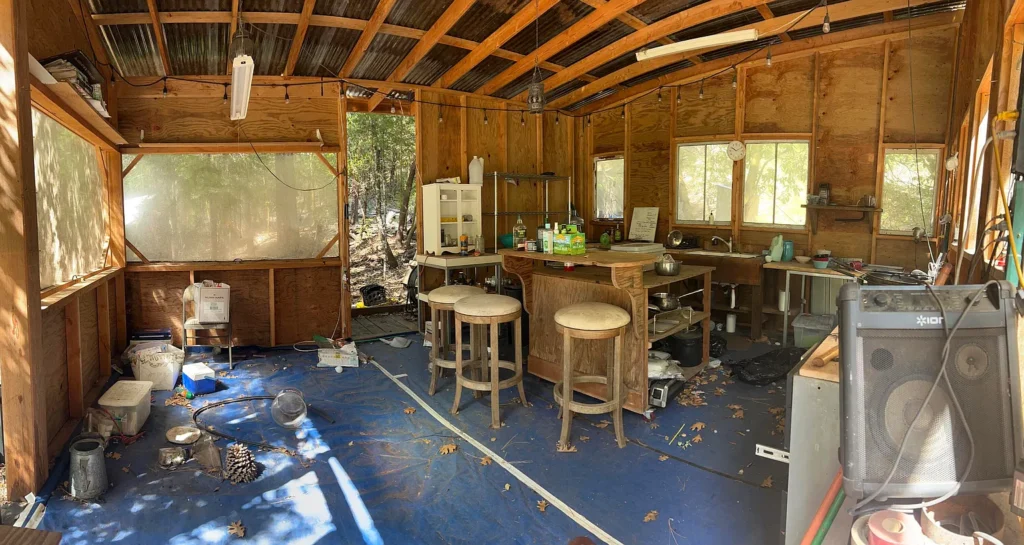
One cabin appears to have a loft sleeping area, multiple windows, wood interior walls and enough interior space for basic furniture.
These aren’t comparable to a conventional two-bedroom California house with standard utilities and bathrooms.
That’s an important distinction because the listing classifies the property as unimproved land and lists zero bathrooms.
Still, having existing structures could make the property more immediately useful than raw acreage for a buyer interested in a recreational retreat or off-grid project.
Their permitting status, structural condition and allowable use should be independently verified before purchase.
Existing Off-Grid Infrastructure
Starting an off-grid property from bare land can require significant time and money.
This property already appears to have several pieces of infrastructure in place.
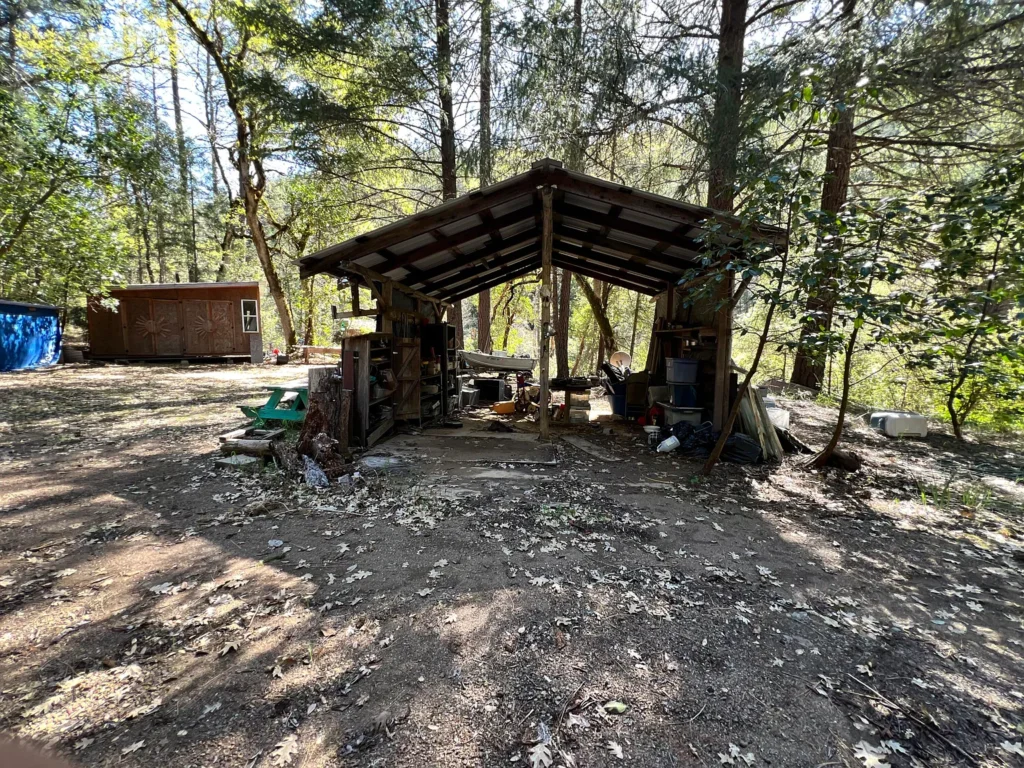
The listing describes a community kitchen, indoor and outdoor workshop areas, multiple outbuildings, garden areas and three 5,000-gallon water tanks.
Together, those tanks represent up to 15,000 gallons of nominal storage capacity, although buyers should verify their condition, plumbing and actual usable capacity.
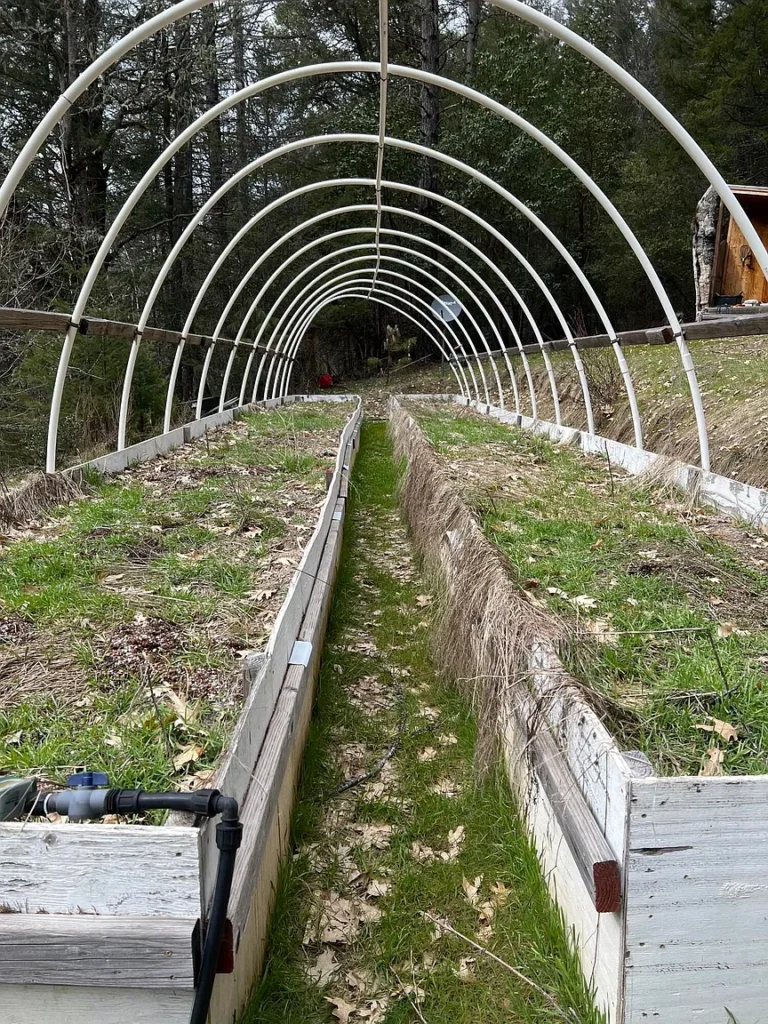
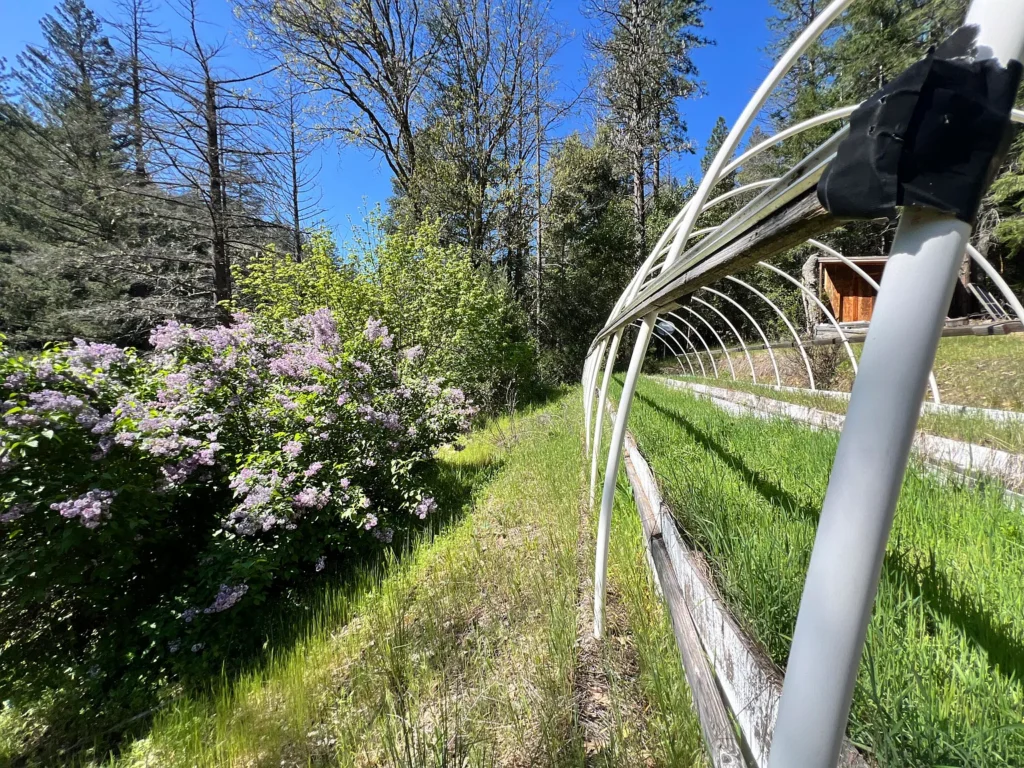
The photographs also show established raised garden beds with hoop-style frames.
For someone interested in an off-grid homestead in California, these existing improvements could be useful because they provide a foundation from which to continue developing the property.
However, they should not be confused with fully permitted residential infrastructure.
What the Property Does NOT Have
The property’s limitations are just as important as its attractive features.
According to the supplied listing information, it currently needs a septic system or composting toilet, and a well and electricity are not present.
Electricity may potentially be available, according to the listing, but buyers should independently determine the feasibility and cost of bringing power to the property.
That means someone intending to live here full-time could face additional expenses beyond the $142,500 purchase price.
Potential costs might include septic installation, solar panels and battery storage, a well or other legal water solution, electrical work, road maintenance, cabin improvements and other site work.
On remote acreage, those costs can become substantial.
Solar Could Be an Important Part of the Setup
The listing specifically describes the property as suitable for solar.
For a remote property without existing electrical service, an appropriately designed off-grid solar system with battery storage could potentially provide electricity without extending utility lines.
But solar feasibility isn’t determined simply by having 95 acres.
Tree cover, slope, seasonal sunlight, electricity consumption and the location of the cabins all affect system design.
The property is heavily wooded, so a professional solar assessment would be useful before estimating system size or installation costs.
For buyers comparing grid extension against solar financing or an off-grid solar installation, the long-term costs of each option should be considered rather than focusing only on upfront equipment prices.
The Garden Infrastructure Adds Homestead Potential
Another interesting feature visible in the photographs is the established garden infrastructure.
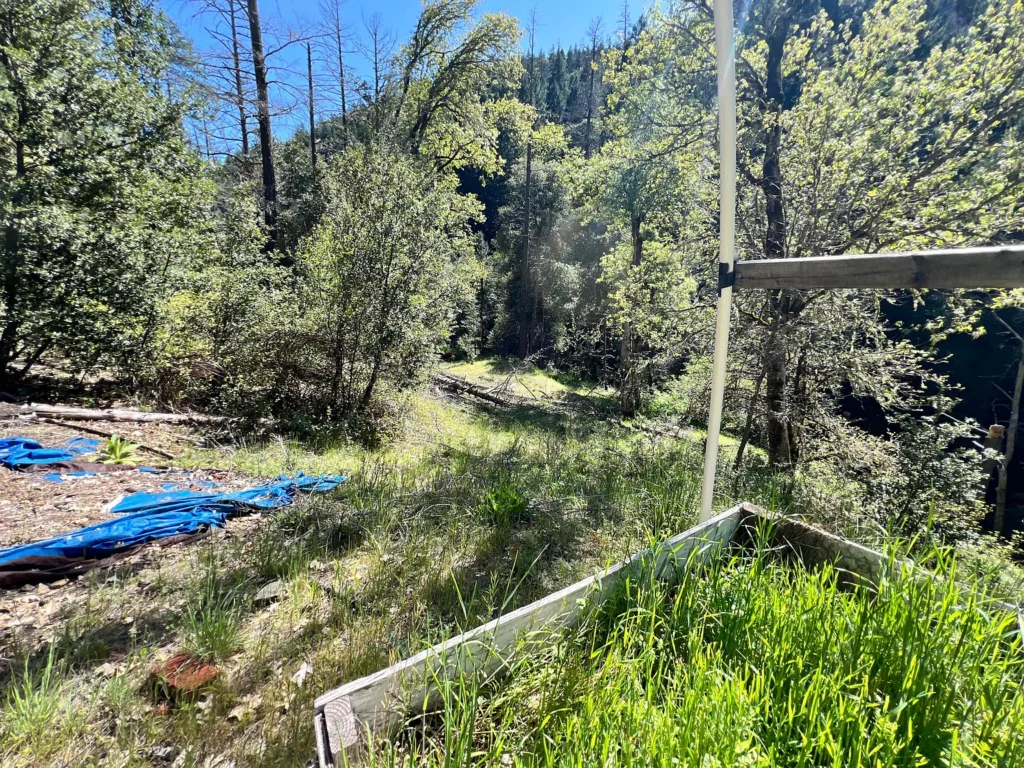
Long raised beds and hoop frames appear to have already been constructed in a cleared area.
That may appeal to buyers interested in food production or a self-sufficient lifestyle.
However, anyone planning a serious homestead should evaluate sunlight, soil quality, irrigation, wildlife pressure, growing conditions and water availability before deciding how productive the existing garden area could become.
This is a good example of why evaluating rural property requires more than simply counting acres.
A smaller, sunny and accessible area near water can sometimes be more practically valuable for daily homestead activities than dozens of steep wooded acres.
Privacy Is a Major Part of the Appeal
The listing emphasizes privacy and seclusion, noting that the property sits behind an electronic gate with no nearby neighbors.
The photographs reinforce that remote character. The cabins and other structures appear surrounded by mature trees, while the broader landscape consists largely of forested hills.
For buyers actively seeking a secluded retreat, that can be a major advantage.
For other buyers, the same isolation could be a disadvantage.
Distance from groceries, medical care, employment, emergency services and other everyday necessities should be evaluated before considering full-time occupancy.
The Terrain Deserves Serious Attention
The listing describes the property as including flat, rolling, sloped and steep terrain.
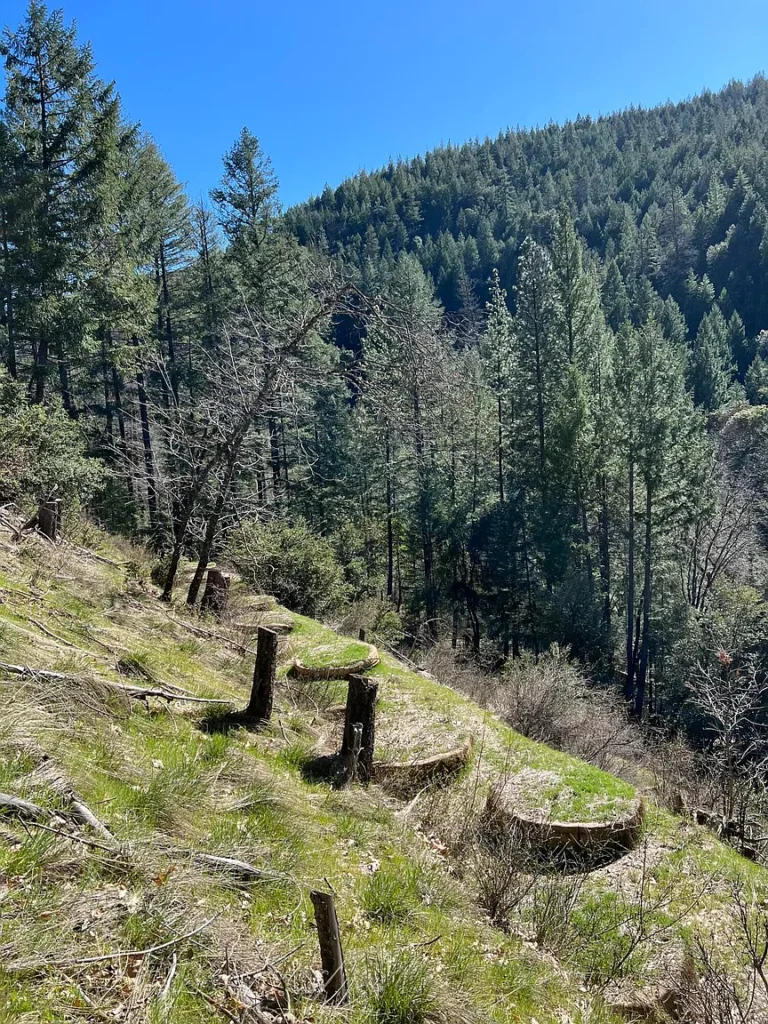
The photographs clearly show mountainous and heavily wooded surroundings.
This is particularly relevant because the larger 86-plus-acre parcel is described as steep.
Steep land can be beautiful and provide exceptional privacy, but it may also increase the difficulty and cost of road construction, building, vegetation management and utility installation.
Northern California properties can also face wildfire-related concerns.
A buyer should investigate defensible-space requirements, emergency access, evacuation routes and the availability and cost of property insurance.
Insurance is something worth investigating before closing, not afterward.
Price History: From $180,000 to $142,500
The property’s listing history provides another interesting piece of context.
It was marketed at $180,000 in 2023, then at $168,000 in 2024, followed by $158,000 in 2025.
In April 2026, it returned at $142,500, approximately 9.8% below the previous $158,000 asking price.
Using the earlier $180,000 asking price as a reference:
$180,000 − $142,500 = $37,500
That’s roughly a 20.8% reduction from $180,000.
This does not prove the property is undervalued. Listing prices are seller asking prices, not independent appraisals or completed-sale values.
But the history is useful because it shows the property has been marketed across multiple years and at progressively lower asking prices.
A potential buyer should compare the current price against recent completed sales of similar Trinity County acreage, not simply against the property’s previous listing prices.
Why Zillow’s $20,357 per Square Foot Figure Isn’t Useful Here
The supplied listing displays an eye-catching figure of approximately $20,357 per square foot.
That number can be misleading without context.
The listing also reports only 7 square feet of interior livable area. Dividing $142,500 by seven produces roughly $20,357 per square foot.
But this is clearly not an appropriate way to value a 95-acre off-grid land property with cabins and outbuildings.
For this type of real estate, buyers are more likely to examine factors such as acreage, usable land, water features, access, existing improvements, comparable land sales and development potential.
It’s a useful reminder that automated real estate metrics sometimes require interpretation rather than being taken literally.
Financing May Be More Difficult Than With a Normal House
Financing this property could differ substantially from financing a conventional single-family home.
Because it is classified as unimproved land and lacks standard utilities and a bathroom, some conventional residential mortgage programs may not fit the property.
Potential buyers who aren’t paying cash may need to investigate options such as a land loan, rural property financing or other specialized real estate financing.
Land loans can have different down-payment requirements, interest rates and underwriting standards from conventional home mortgages.
Buyers should speak directly with lenders familiar with rural California properties rather than assuming a standard mortgage will be available.
The Real Cost Is More Than $142,500
For an off-grid property like this, the asking price should be viewed as only the starting point.
A more realistic budget might look like:
Purchase Price + Closing Costs + Financing Costs + Septic/Composting System + Power System + Water Infrastructure + Road Maintenance + Building Improvements + Insurance + Property Taxes = Total Ownership Cost
Some buyers may already be comfortable with an entirely off-grid lifestyle and require relatively few changes.
Others may want a well, conventional septic system, substantial solar setup and cabin upgrades.
Those two buyers could end up spending very different amounts on the same property.
Could This Work as a California Homestead?
Potentially—but this question needs more investigation than the listing alone can provide.
The property has several features that could appeal to a homesteader: substantial acreage, a year-round creek, existing cabins, large water tanks, garden infrastructure, outbuildings, privacy and workshop areas.
At the same time, there are challenges: steep terrain, no conventional bathroom, no septic system, no existing well and no electricity.
Local land-use and building regulations also matter.
Anyone planning full-time residential use, additional cabins, agricultural structures or significant development should contact the appropriate local authorities before purchasing.
Potential Advantages and Risks
The biggest attractions are easy to understand: 95 acres, a year-round creek, two existing cabins, three large water tanks, garden infrastructure, workshops, multiple outbuildings and considerable privacy for an asking price of $142,500.
The challenges are equally significant. Much of the larger parcel is reportedly steep, standard utilities are absent, there is no bathroom, septic or composting infrastructure still needs to be addressed, and electricity or solar infrastructure may require additional investment.
Remote access, wildfire exposure, insurance availability and the legal status of existing structures and water use also deserve careful investigation.
This is therefore a property where the low price per acre tells only part of the story.
Due Diligence Before Buying
Before making an offer, a prospective buyer should verify both parcel boundaries and legal access, confirm the permitting status and condition of the cabins and other structures, research zoning and allowable uses, investigate septic feasibility, understand legal water rights and creek-use restrictions, evaluate well feasibility, obtain estimates for electrical or solar installation, inspect the water tanks, investigate wildfire risk and insurance costs, confirm year-round road access and maintenance responsibilities, and compare the property with recent local land sales.
A title review may also be particularly important because two separate parcels are involved.
For anyone planning financing, contacting a lender early could prevent discovering late in the transaction that the property doesn’t qualify for the expected loan program.
Who Is This Property Best Suited For?
This isn’t likely to appeal to the average buyer looking for a conventional move-in-ready California home.
Its strongest audience is probably someone specifically seeking remote land, an off-grid homestead, a recreational retreat or a private creekside property and who understands the additional responsibilities associated with rural acreage.
Someone comfortable with solar power, water storage, septic alternatives and ongoing land maintenance may see significant potential here.
Someone expecting suburban convenience may see the exact same characteristics as disadvantages.
Final Thoughts
At $142,500 for approximately 95 acres, this Douglas City property initially looks inexpensive by California real estate standards.
But acreage alone isn’t what makes it interesting.
The combination of a year-round creek, two insulated cabins, garden areas, three large water tanks, workshops, outbuildings and a gated private setting creates an unusual foundation for an off-grid property.
The photographs also show why the land is likely to attract outdoor-oriented buyers: dense forest, mountain terrain and exceptionally clear flowing water create a setting that is very different from conventional residential real estate.
Still, this isn’t a simple $142,500 home purchase.
A buyer needs to understand the steep terrain, infrastructure limitations, utility costs, water regulations, building status, wildfire exposure, insurance and financing before deciding whether the property represents genuine value.
For the right buyer willing to accept those challenges, it could be a fascinating Northern California homestead or recreational project. For everyone else, the due-diligence process should determine whether the beauty and privacy justify the additional complexity.
Frequently Asked Questions
How much land is included?
The listing reports approximately 95 acres divided between two parcels.
How much does the property cost per acre?
Using the $142,500 asking price and 95 advertised acres, the simple calculation is approximately $1,500 per acre. This is not an appraisal or an indication that every acre has equal value.
Does the property have a creek?
Yes. The supplied listing information describes a year-round creek with approximately 172 feet running through the parcel.
Are there cabins on the land?
The listing describes two insulated cabins, along with workshops and several other outbuildings.
Does the property have electricity?
Electricity is not currently present according to the listing information. The listing indicates that electricity may be available, while also describing the property as suitable for solar.
Is there a septic system?
No septic system is listed. The property description says a septic system or composting toilet is needed.
Does it have a well?
A well is not currently present according to the supplied information.
Could the property be used as an off-grid homestead?
The existing cabins, gardens, water storage and acreage may make it interesting for that purpose, but buyers should independently verify zoning, permits, water rights, sanitation requirements and other regulations before purchasing.
Disclaimer
This article is for educational and informational purposes only and does not constitute real estate, legal, financial, mortgage, tax or investment advice. Property price, availability, acreage, boundaries, structure condition, utilities, water rights, permits and other listing information can change or contain errors. Buyers should independently verify all information and consult qualified real estate, inspection, legal, lending, insurance and other professionals before making a purchase decision.
Listed on Zillow
