Looking for a large piece of rural land with privacy, storage space, and the potential for a weekend getaway or homestead? A 34-acre property at 1137 Caribou Road, Fort Kent, Maine 04743, is listed for $115,000 and offers a combination of wooded acreage, an Amish cabin, rainwater collection, and several additional storage structures.
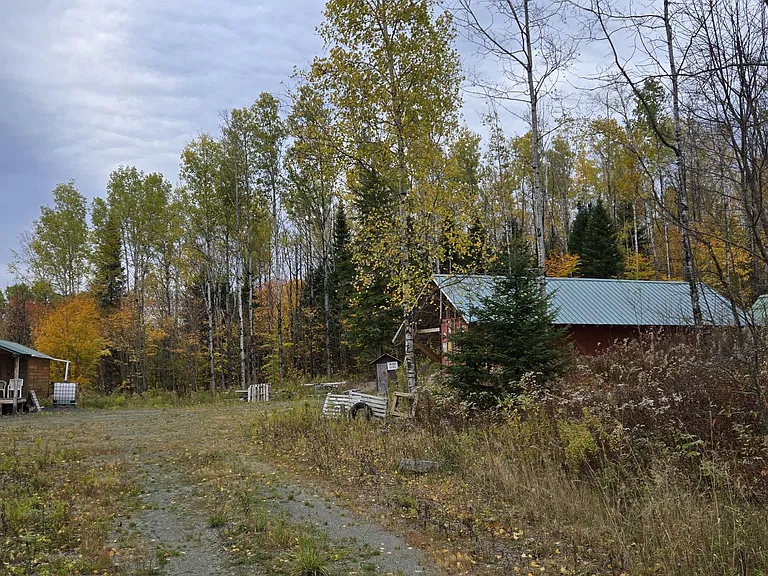
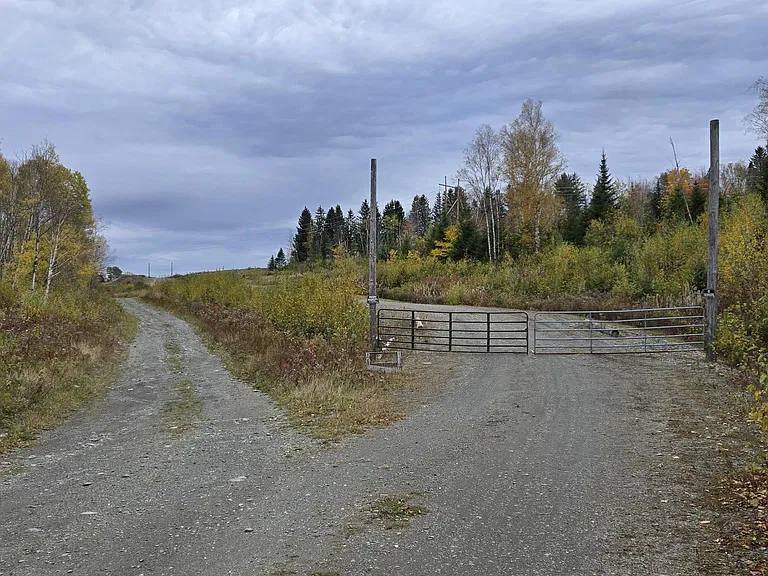
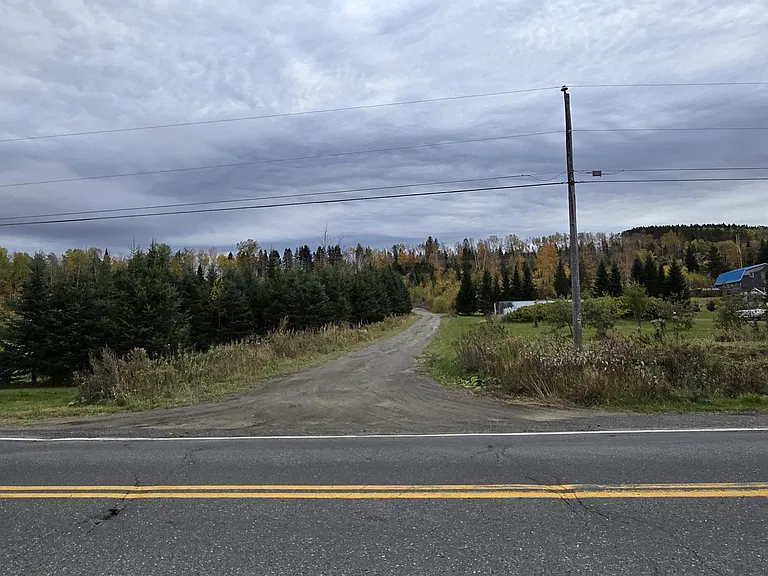
Located on a private road set back from Route 161, this property may appeal to buyers who value space, outdoor recreation, and a quieter lifestyle. The listing describes a long driveway, a hillside setting, wooded surroundings, and gravel that could potentially be used to create a house lot or additional open space.
However, this is not a fully serviced residential property. Electricity is not available on site, and the listing indicates that a well and septic system are needed. Buyers should understand these requirements before calculating the cost of turning the land into a comfortable place to stay.
Property Overview: Key Facts
- Asking price: $115,000
- Land size: 34 acres
- Address: 1137 Caribou Road, Fort Kent, ME 04743
- Property type: Rural land
- Zoning: Rural farm, according to the listing
- Existing structures: Amish cabin, storage container, barn, shed, and other outbuildings
- Water: Rainwater collection is described; a well is needed on site
- Electricity: No electricity available, according to the listing
- Sewer: None; septic system needed
- Road surface: Dirt
- Parking: Gravel parking, with 21 or more spaces reported
- Annual property tax: $824, according to the listing
- HOA: Not specified in the supplied details
- Views: Fields and surrounding trees/woodland
These details come from the supplied property listing and should be independently verified before purchase.
What Does $115,000 Mean for 34 Acres?
At an asking price of $115,000 for 34 acres, the average price is approximately $3,382 per acre.
This provides a useful starting point when comparing the property with other rural land listings in northern Maine. However, the price per acre does not tell the whole story. The existing cabin, storage structures, driveway, gravel, terrain, access, and availability of utilities can all affect the property’s overall value.
The land is described as partially developed, which may offer some advantages compared with a completely untouched parcel. Nevertheless, buyers should confirm the condition and legal status of every structure, as well as the actual quantity and usefulness of the gravel and any existing site improvements.
A careful budget should include the purchase price, inspections, legal fees, property taxes, insurance, utility installation, water supply, wastewater arrangements, and any repairs or construction.
A Private Woodland Setting Near Fort Kent
The property is located in Fort Kent, a community in northern Maine known for its rural surroundings and outdoor lifestyle. According to the listing, the parcel sits back from Route 161 along a private road, offering a more secluded setting than a typical roadside property.
The land is described as wooded and tree-lined, with a hillside setting and views of fields and woodland. These features may appeal to buyers looking for privacy, a place to store equipment, or a base for enjoying the surrounding countryside.
The long driveway provides separation from the main road, but its condition and year-round usability should be checked. Buyers should determine who maintains the private road, whether legal access is documented, and whether snow removal or road improvements could create additional expenses.
The property may offer an attractive rural setting, but its practical value depends on how easily the land can be reached and used throughout the year.
An Amish Cabin and Multiple Storage Structures
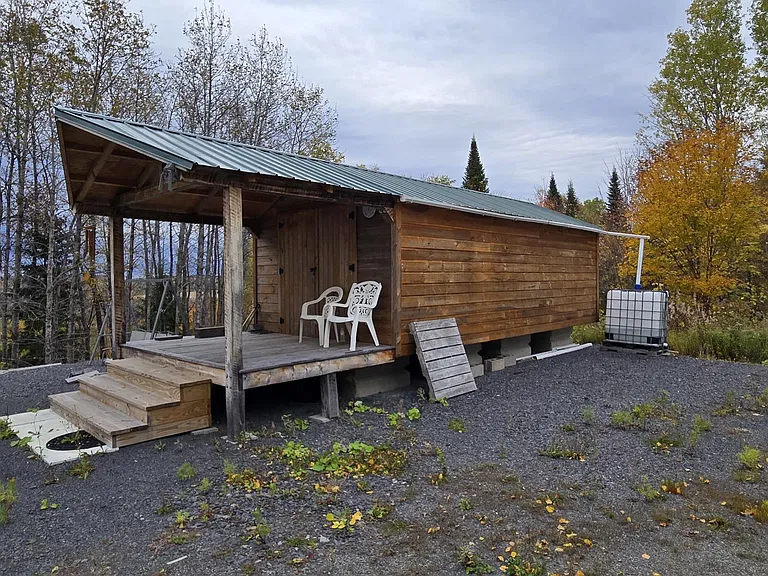
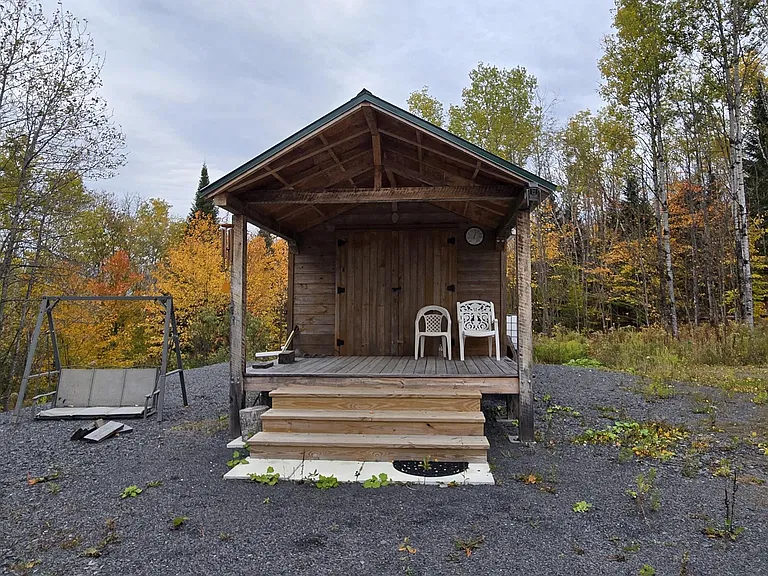
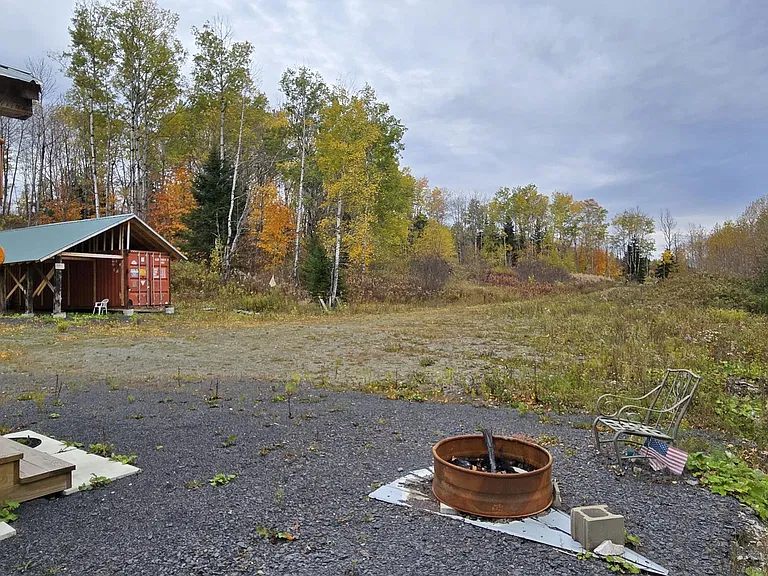
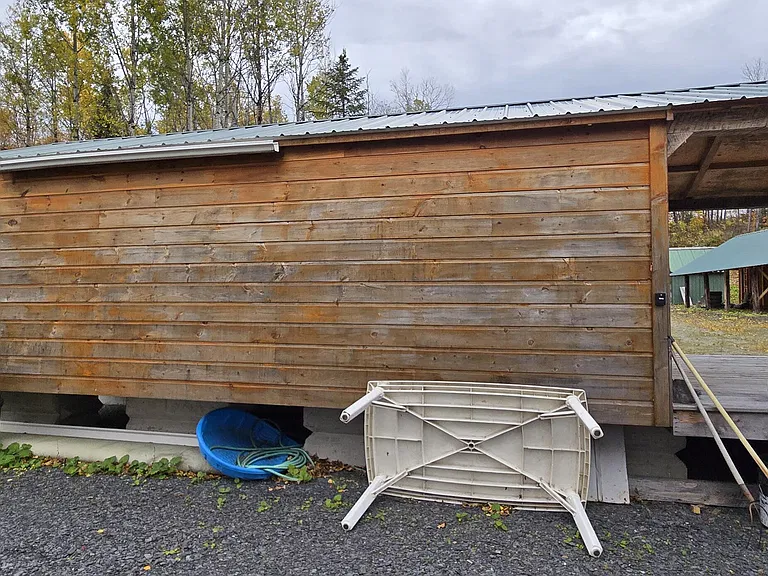
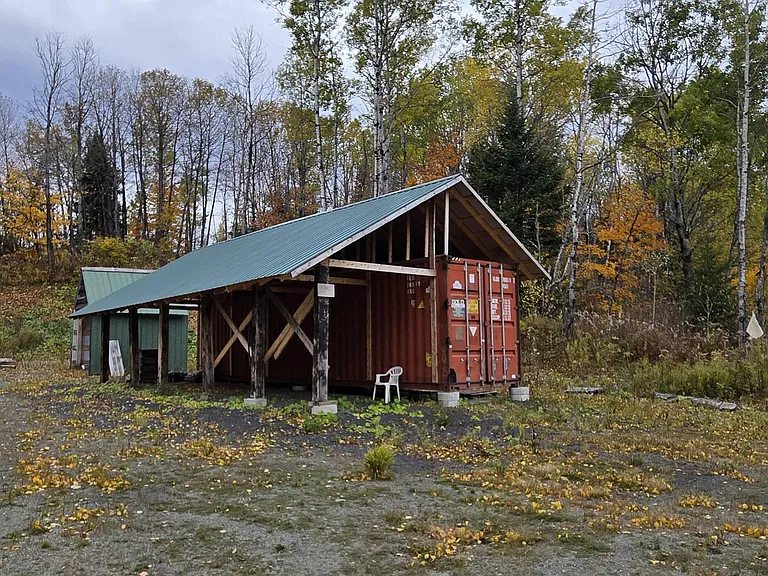
One of the most distinctive features of this listing is the existing Amish cabin. The property also includes a Conex storage container with a roof over it, along with other storage buildings and structures described as a barn, shed, and outbuildings.
These features may be useful for a buyer who needs storage space for tools, recreational equipment, supplies, or materials. The cabin may also offer a starting point for a basic weekend camp, depending on its construction, condition, and permitted use.
However, the listing does not establish the cabin’s exact dimensions, insulation, heating system, sanitation facilities, or suitability for overnight occupancy. Buyers should inspect it carefully and confirm whether it complies with applicable local requirements.
The storage container and additional structures should also be examined for roof condition, moisture, structural integrity, security, and any necessary repairs. Confirm which items are included in the sale and whether the buildings are permitted where required.
Rainwater Collection and Water Supply
The listing mentions rainwater collection associated with the Amish cabin. This may be useful for certain non-potable purposes, depending on the collection and storage setup.
However, rainwater should not automatically be considered safe drinking water. Potability depends on the collection surface, storage conditions, filtration, treatment, and appropriate testing.
The listing also states that a well is needed on site and that no established water supply is provided. Anyone planning regular or extended stays should investigate the feasibility and cost of installing a well, including the likely drilling conditions and water quality.
Before making a purchase decision, buyers should determine whether the existing rainwater collection system is functional, how much water it can store, and what additional water infrastructure would be necessary.
No Electricity: Planning for an Off-Grid Setup
There is no electricity available on the property, according to the supplied listing. For some buyers, this may be part of the appeal of a remote retreat. For others, it may be a significant limitation.
A buyer interested in an off-grid setup could investigate solar panels, battery storage, a generator, and energy-efficient appliances. The appropriate system would depend on the cabin’s intended use, heating requirements, lighting, refrigeration, water pumping, and other electrical loads.
Before budgeting for equipment, check the available sunlight, suitable locations for panels, winter conditions, and any local requirements for installing electrical systems.
Off-grid living also requires a practical plan for heating, cooking, sanitation, communications, and emergency access. These costs should be included in the overall project budget rather than treated as minor additions.
Could This Land Work for a Homestead?
The listing identifies the property as rural-farm zoning and describes it as suitable for people interested in homesteading, storage, or a weekend camp.
The 34-acre size may provide space for several potential uses, but the actual options depend on the terrain, soil, drainage, access, zoning rules, and local regulations.
Anyone considering a homestead should investigate whether suitable areas exist for a residence, garden, greenhouse, outbuildings, or other planned facilities. A well and an approved septic system may be essential for a permanent residence.
The description of rural-farm zoning does not automatically mean every agricultural, residential, commercial, or recreational activity is permitted. Confirm allowable uses with the relevant local authorities before making plans.
Gravel, Driveway, and Potential Site Improvements
The listing mentions a long driveway and plenty of gravel that could be used to create a house lot or additional open space.
Existing gravel and site preparation may offer value if they are suitable for the buyer’s intended project. However, the quantity, quality, location, and condition of the material have not been independently verified.
Buyers should inspect the driveway for drainage, erosion, soft ground, steep sections, and seasonal accessibility. They should also determine whether additional clearing, grading, culverts, or road improvements would be needed.
If the intention is to build a home, a professional assessment can help establish whether the proposed building area is suitable and whether access for construction vehicles is practical.
Annual Property Taxes and Ongoing Costs
The supplied listing reports annual property taxes of $824. This is an important figure to verify, but it should not be treated as the complete cost of owning the land.
Additional expenses may include property insurance, road maintenance, snow removal, structure repairs, tree management, well installation, septic installation, electrical equipment, and general upkeep.
A buyer should request current tax information and confirm whether the assessment could change following a purchase or improvements. It is also worth asking an insurer whether the remote location, lack of electricity, and existing structures affect available coverage or premiums.
The full cost of ownership depends on how frequently the property will be used and whether the buyer plans to develop it further.
Potential Uses for the Property
1. Weekend Camp
The existing cabin may provide a starting point for a recreational getaway. Buyers should first verify its condition, permitted occupancy, water arrangements, and sanitation options.
2. Storage and Equipment Space
The Conex container and additional outbuildings may appeal to buyers who need space for tools, supplies, or recreational equipment. Confirm the condition, security, and permitted uses of the structures.
3. Off-Grid Retreat
The wooded setting and existing cabin may interest buyers seeking an off-grid experience. A practical plan for electricity, drinking water, sanitation, heating, and emergency access is essential.
4. Future Homestead
The acreage may offer room to investigate a rural homestead, but any plans for a residence, garden, livestock, or agricultural use must be assessed against soil conditions, available infrastructure, and local regulations.
These are possible uses to investigate, not guaranteed or approved uses of the property.
Advantages and Disadvantages
Potential advantages
- 34 acres of rural, wooded land.
- An existing Amish cabin.
- A Conex storage container and multiple additional structures.
- A long driveway and gravel already present on the property.
- A secluded setting near Fort Kent.
- Potential for recreational use or further development, subject to verification.
- Listing-reported annual property taxes of $824.
Important disadvantages
- No electricity currently available, according to the listing.
- A well is needed on site.
- A septic system is needed.
- The road is described as dirt, and the driveway and private-road access require inspection.
- The cabin’s condition and suitability for overnight or residential use are not established.
- Additional costs may be necessary for utilities, repairs, permits, and site preparation.
- Rural-farm zoning and proposed uses require confirmation.
The property may be more suitable for buyers comfortable with rural land management and infrastructure projects than for those seeking a ready-to-occupy home.
Buyer Due-Diligence Checklist
Before purchasing, prospective buyers should:
- Confirm the current asking price and legal parcel boundaries.
- Review the title, recorded easements, and private-road access arrangements.
- Inspect the driveway and determine who is responsible for road maintenance and snow removal.
- Check the cabin, storage container, barn, shed, and all other structures.
- Confirm which buildings and items are included in the sale.
- Investigate well-drilling feasibility, likely costs, and water quality.
- Obtain estimates for an approved septic system.
- Assess options and costs for electricity or an off-grid power system.
- Confirm zoning rules and the permitted uses of the property.
- Investigate building-site suitability, soil, drainage, and any environmental restrictions.
- Verify current property taxes and insurance availability.
- Prepare a total budget that includes purchase, improvements, maintenance, and contingency costs.
Final Verdict: Is This 34-Acre Maine Property Worth Considering?
Listed for $115,000, this 34-acre parcel in Fort Kent offers a combination of wooded land, an Amish cabin, storage structures, a long driveway, and a rural setting. The property could be worth investigating for buyers who need space, enjoy outdoor recreation, or want to explore a weekend camp or future homestead.
Its strongest selling points are the acreage and the existing structures. However, the lack of electricity, need for a well and septic system, and uncertainty surrounding the cabin’s condition mean that buyers should carefully evaluate the additional investment required.
At approximately $3,382 per acre, the asking price offers a useful basis for comparison with similar rural properties. Still, the property’s real value depends on its access, usable land, structure condition, and the cost of making it suitable for the buyer’s plans.
The bottom line: This could be an interesting rural property for a buyer who values privacy and is prepared for infrastructure work. It is less suitable for anyone expecting a fully serviced residential property without significant additional investment.
Disclaimer: This article is based on the supplied listing description and has not been independently verified. All property details, access rights, zoning, building conditions, utility availability, and development possibilities should be confirmed with the seller, relevant authorities, and qualified professionals before purchase.
Listed on Zillow
